Restoring Factory Gloss to Worn Paint
Paint Correction & Polish in Wood Village for vehicles showing swirl marks, light scratches, and diminished surface clarity
Window Tint King performs paint correction and polish services in Wood Village that remove visible imperfections accumulated through regular washing, automated car washes, and environmental exposure. Your vehicle's paint collects swirl marks from improper drying techniques, light scratches from contact with debris, and oxidation that dulls the original finish. Machine polishing using professional-grade compounds removes these defects by leveling the clear coat to restore factory gloss and optical clarity.
The correction process addresses paint imperfections that standard washing cannot fix, bringing back depth and reflectivity lost over months or years of use. Different correction levels are applied based on your paint's current condition, ranging from single-stage polish for minor hazing to multi-stage compounding for deeper scratches and severe swirl patterns. Professional equipment and measured product application prevent over-correction while achieving visible restoration across all painted panels.
Request a paint inspection to determine the appropriate correction level for your vehicle's current finish.
How Machine Polishing Removes Surface Defects
Paint correction relies on controlled abrasion using dual-action or rotary polishers paired with compounds formulated to cut through the clear coat at precise depths. The machine's oscillating motion combined with cutting compounds removes microscopic layers of clear coat where scratches and swirl marks exist, leaving a leveled surface that reflects light uniformly instead of scattering it through imperfections. Pad selection, compound grit, and polishing speed are adjusted throughout the process based on how the paint responds during initial test sections.
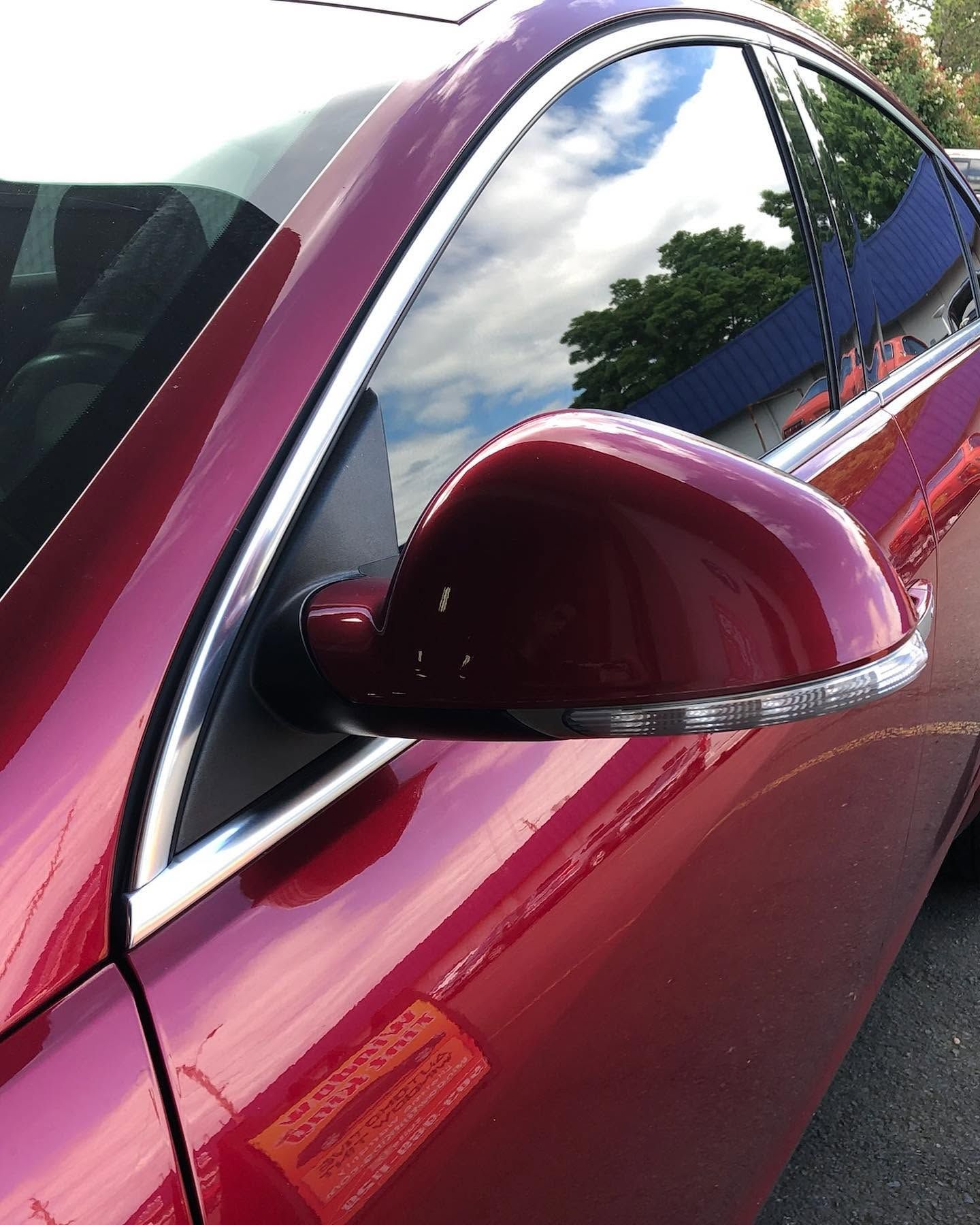
After correction, your paint displays restored gloss with swirl marks no longer visible under direct sunlight and scratches either completely removed or reduced to the point where they disappear to the naked eye. Surface clarity improves enough that reflections appear sharp rather than distorted, and the paint's original color depth returns as oxidation and hazing are polished away. Window Tint King evaluates paint thickness before correction begins to determine safe removal limits without compromising the clear coat's protective function.
Pairing paint correction with
ceramic coating application provides long-term protection once the surface is restored, sealing the corrected finish against UV degradation and contamination that would otherwise reintroduce defects. Correction prepares the paint for maximum coating adhesion by removing oils and residues left from polishing compounds. Vehicles that undergo correction without subsequent protection will gradually accumulate new swirl marks through normal washing, though the corrected surface starts from a defect-free baseline that extends the time before imperfections become noticeable again.
Questions Before Starting Your Project
Many vehicle owners in Wood Village ask about the correction process before committing to paint restoration work, especially when deciding between correction levels or understanding how polishing differs from detailing.
What determines the correction level needed for my vehicle?
Paint thickness measurements and visual inspection under high-intensity lighting reveal the depth and density of existing scratches, which dictates whether single-stage polishing or multi-stage compounding is required to achieve clarity without removing excessive clear coat.
How does machine polishing differ from hand waxing?
Machine polishing uses abrasive compounds and oscillating pads to physically remove defects by leveling the clear coat, while hand waxing only fills scratches temporarily with product that washes away, leaving the underlying imperfections unchanged.
Will correction remove all scratches from my paint?
Correction removes scratches that exist within the clear coat layer, but deeper scratches that penetrate to the base coat or primer require touch-up paint or refinishing rather than polishing alone.
Why does corrected paint need ceramic coating afterward?
Ceramic coating bonds to the freshly polished surface and forms a hard protective layer that resists swirl marks from washing, prevents oxidation from UV exposure, and maintains the restored gloss for years instead of months.
How long does paint correction take to complete?
Correction duration depends on paint condition and vehicle size, ranging from several hours for light polishing on smaller vehicles to full-day sessions for severe swirl removal on larger SUVs or trucks with extensive panel area.
Window Tint King inspects paint condition using calibrated lighting and thickness gauges to provide accurate correction recommendations based on measurable defects rather than visual estimates alone. Schedule a paint assessment to receive a detailed quote that outlines the correction approach specific to your vehicle's finish.